How to Choose the Right Thermal Label Sensor.

Selecting the proper thermal label sensor is essential for maintaining precise print registration and avoiding costly paper jams. This comprehensive guide details how transmissive gap sensors, reflective black mark sensors, and physical notch mechanisms interact with various facestocks, liners, and adhesives.

HY Paper DYMO compatible thermal label for barcode and address printing

How Thermal Label Sensing Prevents Continuous Feed and Alignment Errors

Thermal printers need to rely on accurate optical or mechanical detection tools, so that the machine can determine where one cut label ends and the next label begins. If the printer lacks accurate label detection functions, the printhead cannot calculate the top starting edge correctly, which causes printed images to shift position during high-speed runs. If this positional error keeps accumulating, it creates severe alignment issues, leaving barcode graphics cut directly in half, or printing text straight onto the backing paper.

As the media moves through the feed mechanism, transmissive and reflective sensors read changes in light transmission or surface reflectivity. Once light passes through the gap between labels, or bounces back from a high-contrast black mark on the backing paper, a small controller inside the printer receives a sudden voltage signal. This signal immediately recalibrates the stepper motor, locking the starting point of each print pass to the exact beginning position of the label media. Prompt sensor feedback not only stops the paper from drifting, but also lightens the mechanical tension on the rubber roller, which reduces paper jams, and prevents expensive printheads from being damaged by glue residue.

Standard Gap Sensing Mechanisms in Roll-Fed Label Printers

Transmissive detection, which people usually call standard gap sensing, mainly relies on a light emitter and receiver installed on the top and bottom sides of the paper path. As the whole label roll moves through the printer, the sensor measures the light difference between the label itself and the semi-transparent glassine backing paper. Because thicker label paper absorbs more light, while single-layer backing paper lets more infrared light pass straight through the cut gap, this rapid change in light intensity causes the sensor’s output voltage to drop. The printer controller receives a signal immediately, knowing that the front edge of a fresh label has reached the print line.

HY Paper 75 x 50 mm thermal label size diagram

If workers want to keep detection results stable, they need to adjust the physical position of the sensor along the paper guide, especially when printing multi-column labels or labels with rounded corners. If the light beam happens to hit pre-printed patterns or irregular liner seams instead of the cut gap, the printer can easily make a wrong judgment. Standard gap sensing works very well for opaque paper and synthetic face materials, but when facing clear plastic labels or heavy backing paper that blocks infrared light completely, its detection capability becomes limited.

Black Mark Sensors for Transparent, Dark, and Die-Cut Substrates

Reflective optical sensors are commonly called black mark sensors, and they measure reflected light instead of transmitted light to solve some limits of transmissive detection. This type of sensor is installed under the paper path, emitting infrared or colored light beams upward toward the back of the backing paper during work. Because clear plastic films, dark synthetic materials, and thicker backing paper often block or scatter light randomly, traditional gap sensing becomes unreliable.

Black mark sensors directly look for high-contrast black bars printed on the back of the backing paper, completely bypassing interference caused by material thickness. Dark carbon-based ink absorbs the light, and compared with the surrounding backing material, the reflected light drops visibly. This obvious change in voltage feedback tells the print driver the exact position of the label edge, no matter if the top face material is totally transparent, metallic, or irregularly shaped.

For black mark detection to succeed, it depends heavily on whether print contrast is strong enough, and whether the black bar shape and size are standard. To absorb light effectively, the black bar must have high optical density, and its width usually needs to reach three to five millimeters within the adjustable sensor range. Also, printing black marks away from background patterns prevents false triggers, ensuring smooth feeding for industrial labels during high-speed printing.

Physical Notches and Hole Punches: When Optical Sensors Fail

When optical light transmission and reflection methods completely fail to work, using physical notches and precision hole punches becomes a reliable hardware solution. Some packaging materials lack the light transmission changes needed for gap sensing, and also lack the dark contrast required for reflection detection, such as clear poly films, thick cardstock, or woven tags. Under these difficult physical conditions, manufacturers punch a clear notch on the edge of the material, or cut a hole directly through the center of the backing paper at each label interval.

As the paper moves forward, a specialized mechanical or transmissive sensor pinpoints these open holes, and when an open gap passes the detection point, it causes a sharp change in light passage or mechanical switch activation. This method of using physical cutouts completely eliminates calibration errors caused by surface graphics, dense hot-stamping foils, or uneven backing paper thickness. The sensor directly ignores surface colors, stray glue, and material transparency, focusing purely on structural cutouts in the material itself.

When using notch detection, workers need to align the sensor assembly and the hole position completely in the physical direction, ensuring the mechanical trigger point matches the starting margin set in the print driver. This structural approach prevents slipping during high-speed printing, ensuring accurate alignment even on complex, heavy industrial materials.

Common Label Alignment Issues and Calibration Solutions

When label alignment problems happen, they usually show up as continuous vertical drift, skipped labels, or printed text crossing over the cut edges during continuous printing. These printing faults usually come from wrong sensor positioning, incorrect driver settings, or dirty material on the optical glass. When the printer fails to detect the top starting point, the internal stepper motor keeps feeding paper, but the printhead does not release ink at the intended position, resulting in cumulative alignment errors.

Paper dust falling from backing paper and residue from evaporating glue often accumulate on the light emitter, which lowers sensor sensitivity and causes it to mistake minor backing paper flaws for real label gaps. If workers want to solve these feeding inaccuracies, they need to combine daily physical cleaning with hardware calibration. Wiping the optical sensor with isopropyl alcohol restores light transmission clarity, allowing the phototransistor to accurately measure small changes in backing paper density or reflective contrast.

HY Paper slitting and rewinding machine for label materials

Performing a manual calibration forces the printer firmware to measure the baseline voltage of the backing paper and the whole label, resetting the internal trigger threshold to match the current paper roll. At the same time, adjusting paper guides tightly against the roll edge prevents paper from moving left and right, keeping the material locked on the central optical track, so that accurately aligned labels can be printed.

Matching Sensor Types with Liner Material, Adhesives, and Backing Textiles

Selecting a proper detection mode requires matching the physical properties of the label combination with the optical characteristics of the printing hardware. If common paper labels are paired with acrylic adhesive and glassine backing paper, they are very suitable for transmissive gap sensors, because the contrast between single-layer backing paper and double-layer labels creates a clear voltage difference. If synthetic materials like polypropylene or polyethylene are used with strong rubber adhesive or dark backing paper, light struggles to pass through, and choosing reflective black mark detection becomes much safer.

Metallic foils and shiny films create mirror-like reflections that easily blind standard reflective sensors, so workers need to install the sensor at an angle, or switch to an RGB light emitter that separates color spectrum contrast. As for fabric backings, thick cardstock, and continuous self-adhesive materials, they have special physical properties and need specialized sensor setups. Woven care labels and thick paper tags have no fixed light gaps and are hard to print with clear black marks, so physical notch sensing or using software to control feeding distance becomes the main approach.

Continuous feed mode turns off optical gap detection completely, relying purely on motor pulse counts to push fixed lengths of material. As long as packaging workers understand these material interactions, they can choose the right material structure during early design, avoiding wasted time and materials on the factory floor.


Resolve Your Label Sensing & Converting Challenges

Struggling with label skipping, clear film calibration, or black mark positioning? Our technical team provides tailored die-cut options, custom mark printing, and free sample rolls validated for your printer model.

The Ultimate Guide to Freezer-Safe Labels for Organic Food Packaging

Choosing excellent freezer-safe food labels is essential for ensuring stability and performance in long-term cold storage. From cold-resistant adhesives to moisture-proof face materials, this guide explores the technical standards and critical factors for organic food packaging in extreme low-temperature environments.

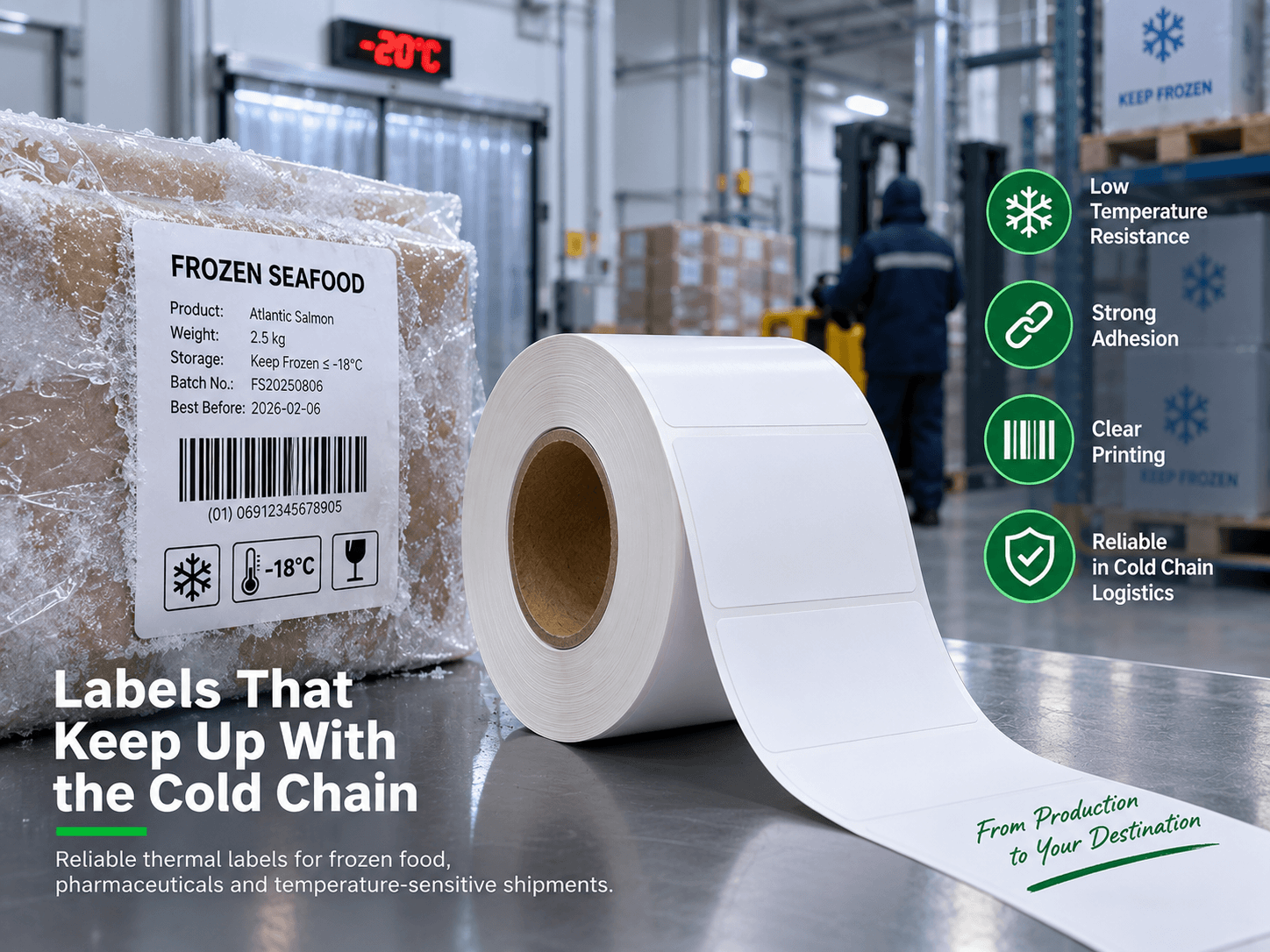
HY Paper frozen food packaging thermal label

Key Features of Premium Freezer Safe Food Labels for Long-Term Frozen Storage

Excellent freezer safe food labels are carefully designed for their stability and effectiveness at extremely cold frozen food storage, providing good adhesion and clarity for several months or even years in either commercial cold rooms or home freezers. The unique cold resistance properties of these special food labels are achieved by the use of customized cold resistant adhesives which ensure steady stickiness and prevent any lifting, bubbling and complete separation during long-term static storage and changing temperatures in freezers which can be damaging for ordinary labels.

The surface of high-quality freezer safe food labels is made from premium materials which provide exceptional frost and moisture resistance to prevent blurring of prints, damaging of texture and destruction of standard food labels due to heavy condensation and frost in freezers. Moreover, environmentally friendly and fade resistant printing inks are used for production of such professional food labels that allow to keep all important information about products, including text, brand name, ingredients and certifications without smudging, fading and peeling. Due to flexible yet durable materials, these labels fit well both flat and curved surfaces of food packages, having great tensile strength and preventing damage.

Common Causes of Cold Chain Label Adhesive Failure in Low-Temperature Environments

The problem of failure of the label adhesive during cold chain logistics and prolonged low temperature storage is due to imperfections and poor compatibility of materials used in manufacturing of the packaging by organic food companies. The conventional label adhesive rapidly loses its initial viscosity under conditions of constant sub-zero temperature due to the fact that cold air hardens its internal adhesive layer and totally eliminates the adhesive forces between labels and various food packaging materials.

HY Paper thermal label for cold chain logistics

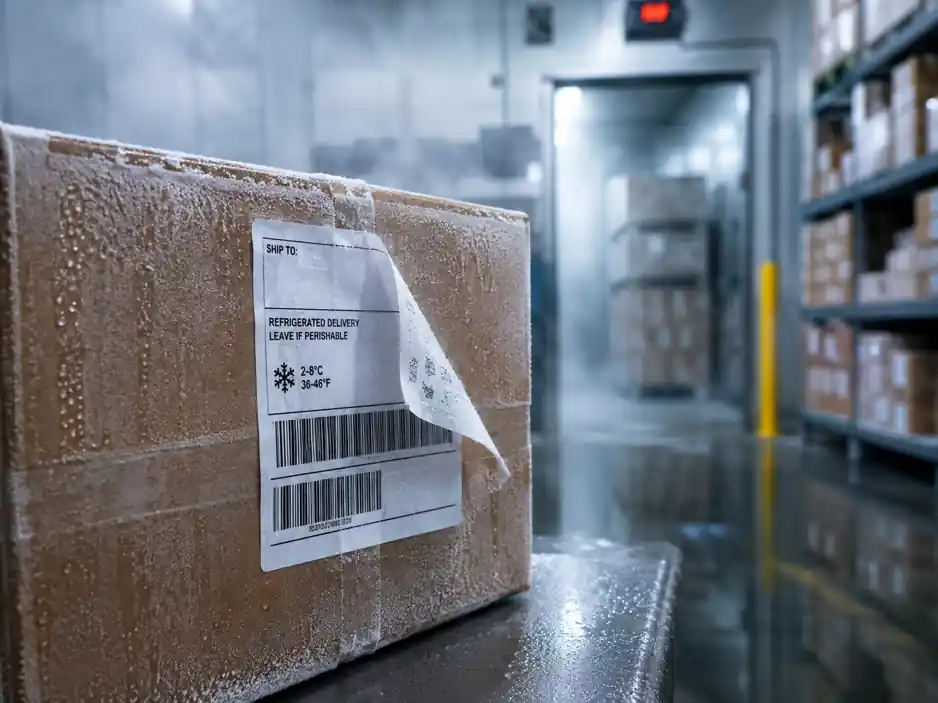
Constant temperature variations in central cold rooms, refrigerated transportation vehicles and frozen display cabinets create condensation on the outside packaging surface, forming a layer of moisture that gradually creates an invisible barrier between the label and the package leading to partial or total separation. Most conventional food labels are made of inexpensive water-based adhesive unsuitable for the rigorous conditions of cold chain operation and unable to withstand long-term frost abrasion leading to gradual peeling off the labels.

Professional Solutions to Avoid Cold Chain Label Adhesive Peeling and Falling Off

Use of quality materials and standardized processes for labeling is able to solve repeatedly occurred cold chain label adhesive peeling and dropping problem for professional organic food packaging. By adopting high-quality and specially designed low-temperature solvent-based adhesives used for bonding only in freezing conditions, the quality and duration of bonding will be guaranteed due to the fact that special composition of this kind of adhesive allows it to resist the influence of freezing and to keep its flexible properties while being exposed to freezing temperatures and frequent changes in temperatures during cold chain logistics.

Waterproof label backing materials improve the durability of labels, as they do not allow label edges to curl up or shrink when exposed to multiple expansion and contraction caused by frosting. Adequate pre-treatment of packaging materials helps to create dry and clean surface for bonding, which increases the quality and durability of labels. The brand may choose customized thickness of labels and strength of adhesion depending on materials used for packaging (including plastic films, kraft paper boxes and composite packaging). Standardized bonding conditions for labels in room temperature also guarantee perfect sticking effect.

Core Standards for Qualified Organic Food Packaging Labels in the Freezer Industry

Freezer-appropriate organic food packaging labels have to conform to rigorous safety and environmental industry standards, as well as demonstrate stable adaptive properties at extremely low-temperature operation. All materials used for manufacturing label base and printing ink should be in accordance with premium safety requirements concerning the production of food-grade products without any harmful or toxic chemical components, which might be dissolved and lead to pollution of natural, organic foods in conditions of long-term storage and freezing and thawing cycles.

HY Paper food label for jars bottles and boxes

Certified organic packaging labels should demonstrate durable and permanent printing of all essential information about product including its origin, list of ingredients, certification, date of production and shelf life data without any signs of fading, blurring or smearing in conditions of constant frosting and low-temperature erosion. Freezer labels for organic products have to pass third-party freezing resistance tests for proving their stable physical characteristics without any cracking, shrinking or peeling in sub-zero conditions of storage. Biodegradability and recyclability of eco-friendly material is a key requirement of the industry and perfectly fits into the sustainable and green development philosophy of the worldwide organic food industry, and standardization of size and safe adhesive provide full compliance with organic food packaging regulations.

How to Select Durable Freezer-Safe Labels for Organic Food Cold Chain Transportation

Choosing high-quality and highly durable freezer-safe labels to be used for the cold chain transport of organic foods needs a thorough investigation of environmental suitability, safety accreditation and usability of labels for long-term logistics and frozen storage. Consumers need to choose those labels that come with customized professional cold-resistant adhesive systems, which allow the labels to have a constant stable bonding strength in spite of frequent changes in temperatures and months-long freezing.

It is important to check the certification credentials to make sure that all the materials from which the labels are made (base material, adhesive and ink) satisfy food grade and environmental safety standards so that they do not affect the purity of the food products and organic certifications. Surface printing quality and functions should be checked in order to be sure that they have high resistance to frosts, moisture and fading, which allows them to be visible at any stages of cold chain transportation, storage and placement on retail shelves. Professional consumers match the specialized label materials with the certain type of packaging, such as plastic films, plastic boxes and coated paper boxes, focusing on their durability and anti-crack properties in order to avoid damages during transportation.


Verify Your Cold Chain Labeling Performance

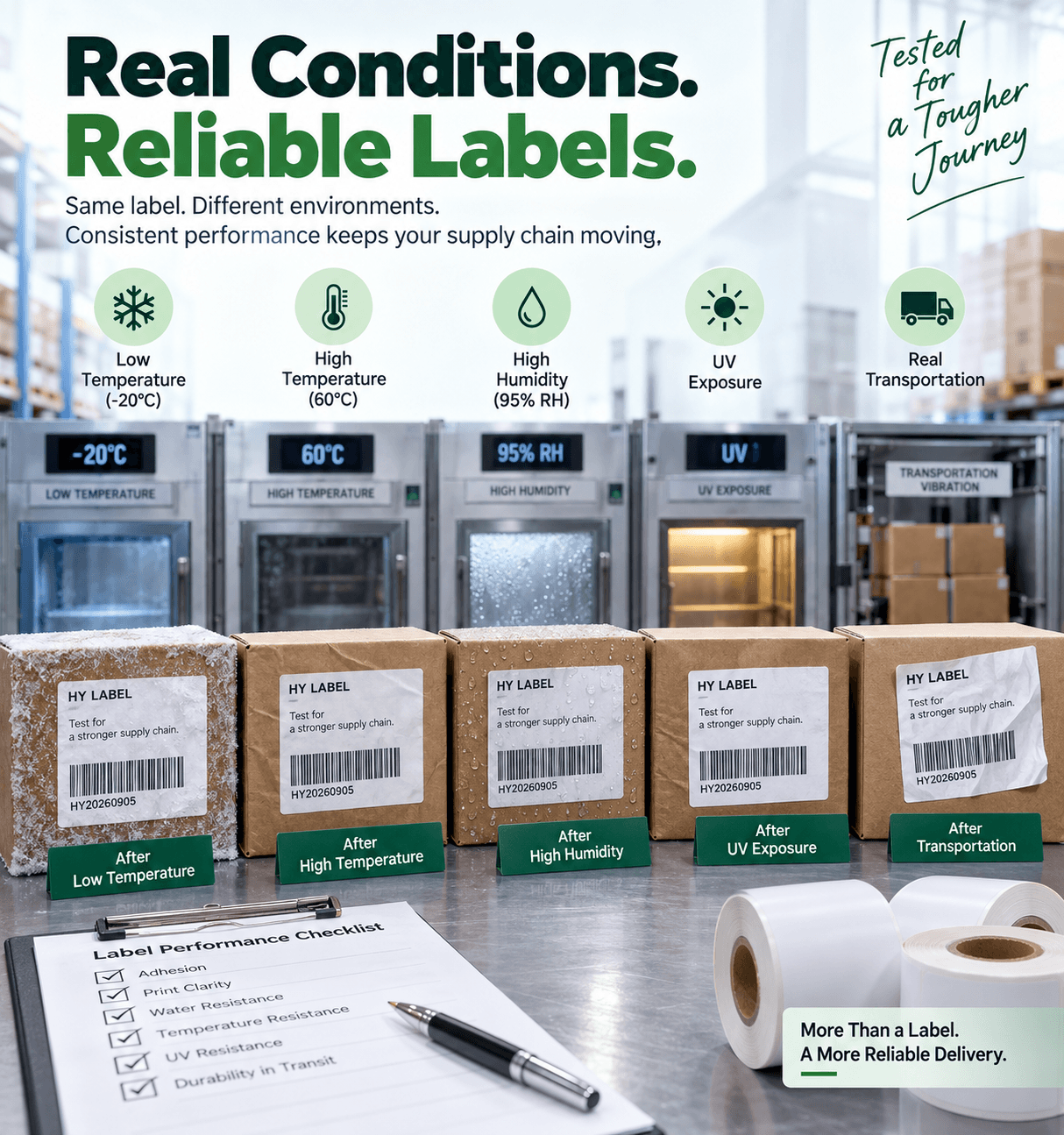
Testing your label adhesives under real -18°C blast freezing and moisture condensation conditions prevents costly transit peeling. Contact HY Paper’s technical center for customized material testing and free physical samples.