
Shipping Label Adhesive for Corrugated Boxes: 7 Factors Buyers Should Check
For logistics procurement teams and label distributors, a shipping label that prints perfectly but starts lifting from the carton is not just an application problem—it is a specification and supplier-selection problem.
When this happens, many buyers immediately assume that the adhesive is not strong enough. Sometimes that is correct, but label adhesion to corrugated boxes depends on more than adhesive strength. The result is influenced by carton surface, adhesive chemistry, application temperature, surface cleanliness, application pressure, and time.
That is why the same shipping label can stick perfectly to one carton and peel from another. Before changing suppliers or simply ordering a stronger adhesive, buyers should identify which application variable changed and translate that finding into a clearer adhesive specification for the next sample or bulk order.
1. Corrugated Surface Is a Purchasing Variable, Not Just a Packaging Detail
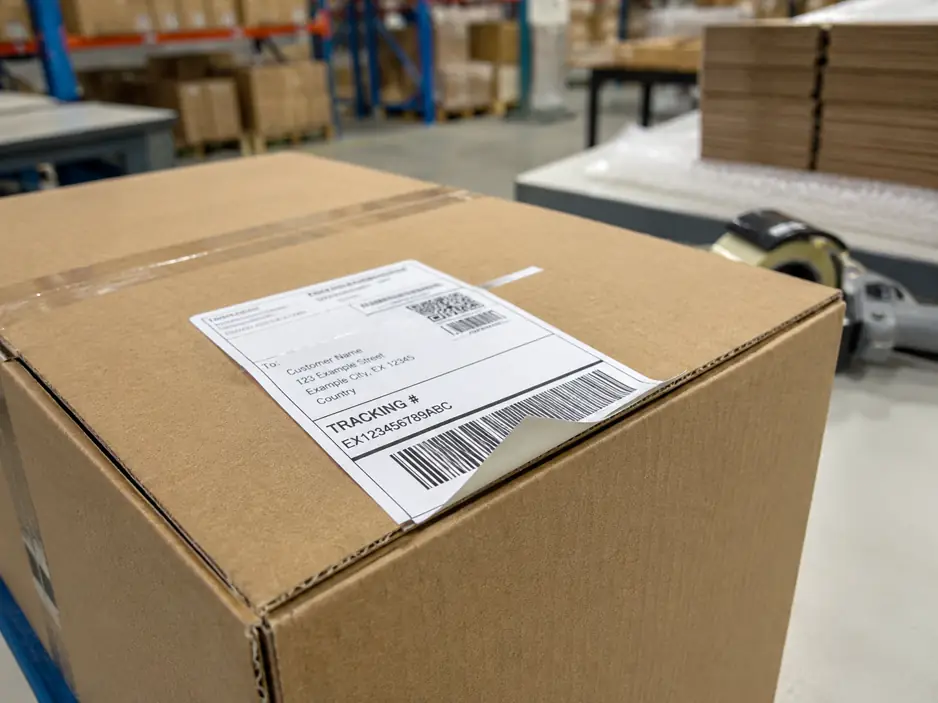
Pressure-sensitive adhesive works best when it can make sufficient contact with the substrate. Corrugated cardboard may look flat from a distance, but its outer liner can be rough, porous, heavily textured, recycled, coated, or dusty.
On a rough surface, only part of the adhesive layer may initially contact the carton. The microscopic high points touch first while low areas remain separated from the adhesive. This is why adhesive systems designed for rough surfaces often require stronger initial tack or a construction designed to achieve better surface contact.
2. Recycled Corrugated Can Change Adhesive Requirements
This is particularly important as more logistics operations use recycled-content boxes. Recycled corrugated does not necessarily present the same outer surface as virgin-fiber board. Your label specification may not have changed, but your carton supplier may have changed fiber composition, recycled content, surface roughness, coating, or dust level.
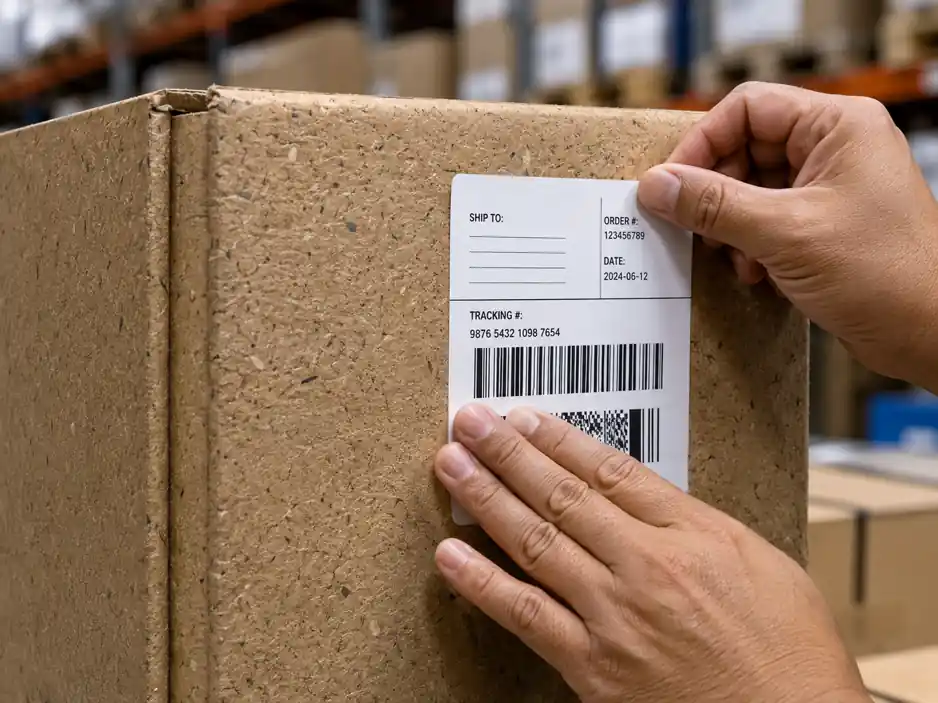
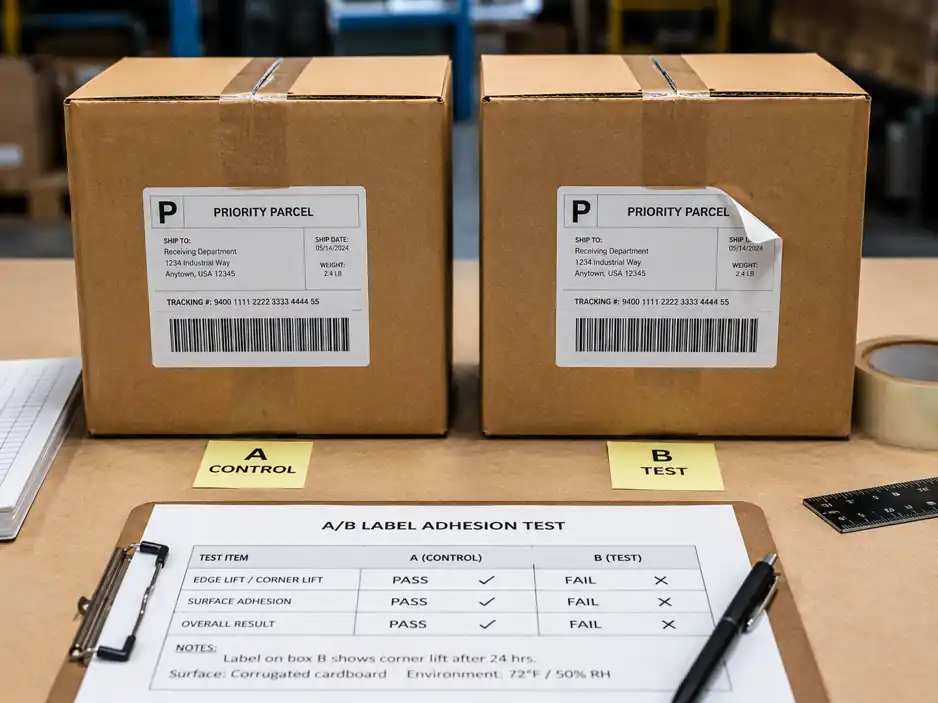
When adhesion suddenly changes, compare an old approved box and the current box using the same label roll. That simple test can quickly separate a carton-related problem from a label-related problem.
3. Why Permanent Adhesive Is Not a Complete Purchasing Specification
For buyers comparing adhesive constructions, one of the most useful distinctions is initial tack versus ultimate adhesion. Initial tack describes how quickly the adhesive grabs the carton when the label is first applied, while ultimate adhesion describes the strength of the bond after it has had time to develop.
- Initial Tack: Essential for high-speed logistics operations because cartons enter conveyors or sorting equipment shortly after labeling.
- Ultimate Adhesion: Ensures long-term holding power across storage and transit lifecycles.
4. Application Temperature Must Be Included in the RFQ
One of the most common specification mistakes is confusing application temperature with service temperature. Application temperature is the temperature of the label and substrate when the label is being applied, whereas service temperature is the range the label can tolerate after a proper bond has already formed.
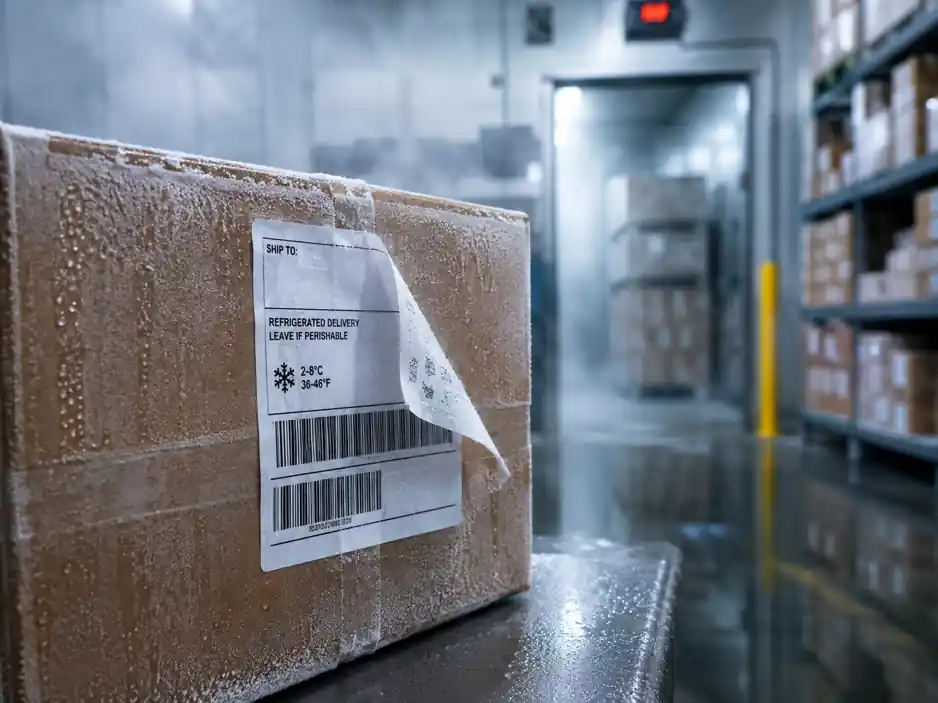
If the carton is already very cold when labeling occurs, a standard adhesive may not wet out correctly. This is especially important in refrigerated warehouses and cold-chain operations.
5. Warehouse Contamination Can Make a Good Adhesive Look Like a Bad One
Sometimes the adhesive never actually bonds to the corrugated fibers because it bonds to what is sitting on top of them, such as paper dust, warehouse dust, moisture, condensation, oil, or handling contamination.
A useful diagnostic clue is looking at the back of a failed label: if it comes away with visible cardboard fibers attached to the adhesive, the failure mechanism differs from a label that cleans away without fiber tear.
6. Sample Approval Must Reflect the Real Application Method
Most shipping labels use pressure-sensitive adhesive. Applying pressure helps the adhesive spread or wet out across the carton surface, increasing the real contact area. A material may pass a manual sample test because someone carefully presses it onto the box, but fail on the production line because the automatic applicator does not provide equivalent pressure.
7. Placement and Carton Flexing Can Still Cause Edge Lift
Avoid applying shipping labels over a box seam, across a corner, over sealing tape, or onto a folded or deeply textured area. When a carton flexes, a label positioned across an edge is continuously bent, making the label edge a starting point for peeling.
Frequently Asked Questions
Why do shipping labels peel off cardboard boxes?
Common causes include rough or recycled corrugated surfaces, insufficient initial tack, low application temperature, dust or moisture, inadequate application pressure, and poor label placement.
What adhesive works best on recycled corrugated boxes?
High-tack permanent adhesives and certain hot-melt constructions are often used for difficult recycled corrugated surfaces, though the material should still be tested on the actual carton.
Is a permanent adhesive always enough for shipping labels?
No. Permanent describes the intended bond type, not its performance on every substrate. Rough recycled corrugated and cold surfaces may require specialized high-tack constructions.
Why does a label stick at room temperature but fall off in a cold warehouse?
The adhesive may have been applied below its minimum application temperature, as application temperature and service temperature are different specifications.
Selecting a Shipping-Label Adhesive for Corrugated Cartons?
Share the carton type, application temperature, application method and required label life so the construction can be evaluated and sample-tested before bulk approval.