
Cold Chain & Freezer Labels
Labels for chilled foods, frozen packaging, cold storage and temperature-controlled distribution.
Material selection is matched to the package surface, moisture, application temperature and service temperature. These conditions are confirmed separately before sampling.
Typical Applications
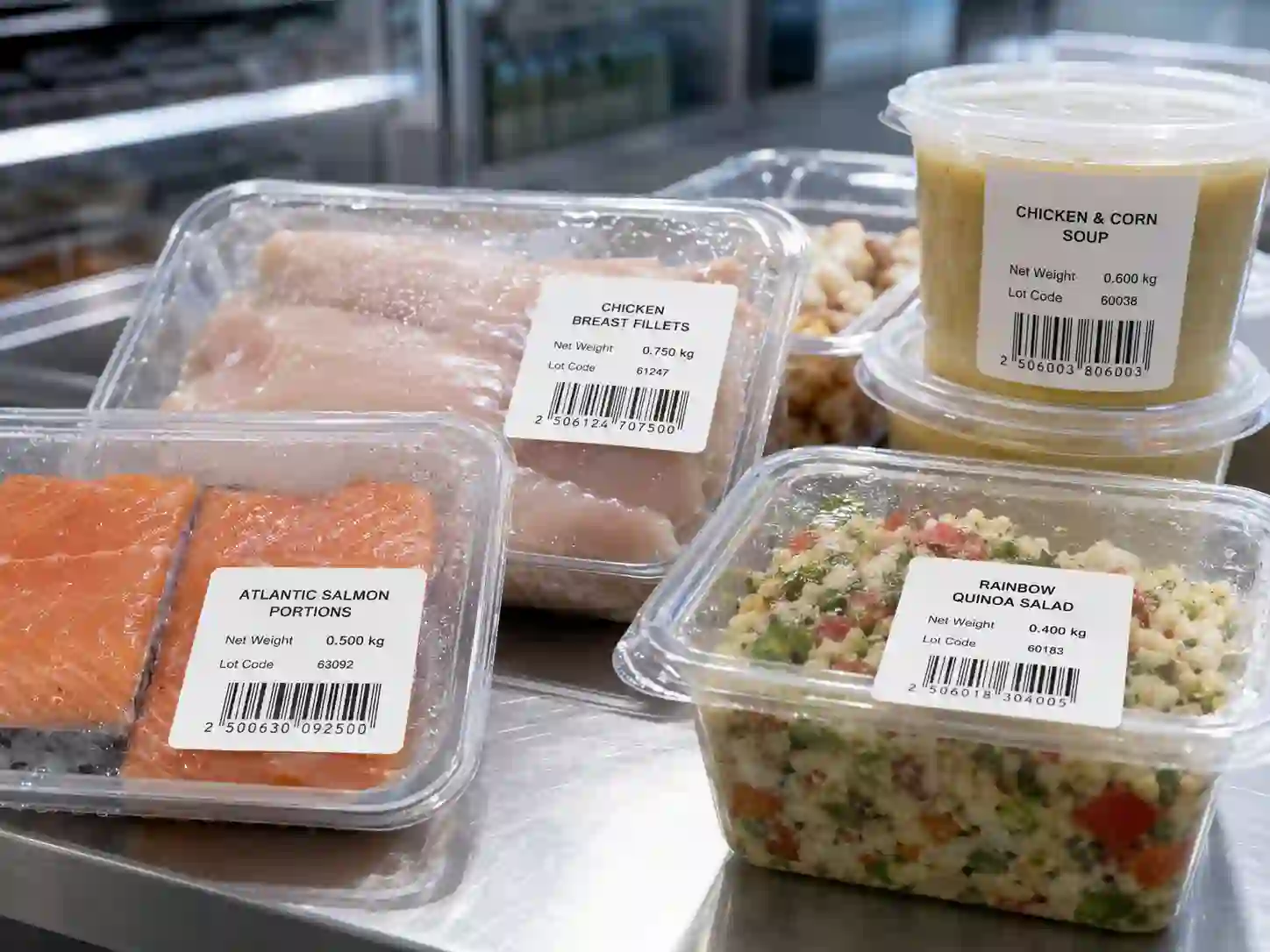
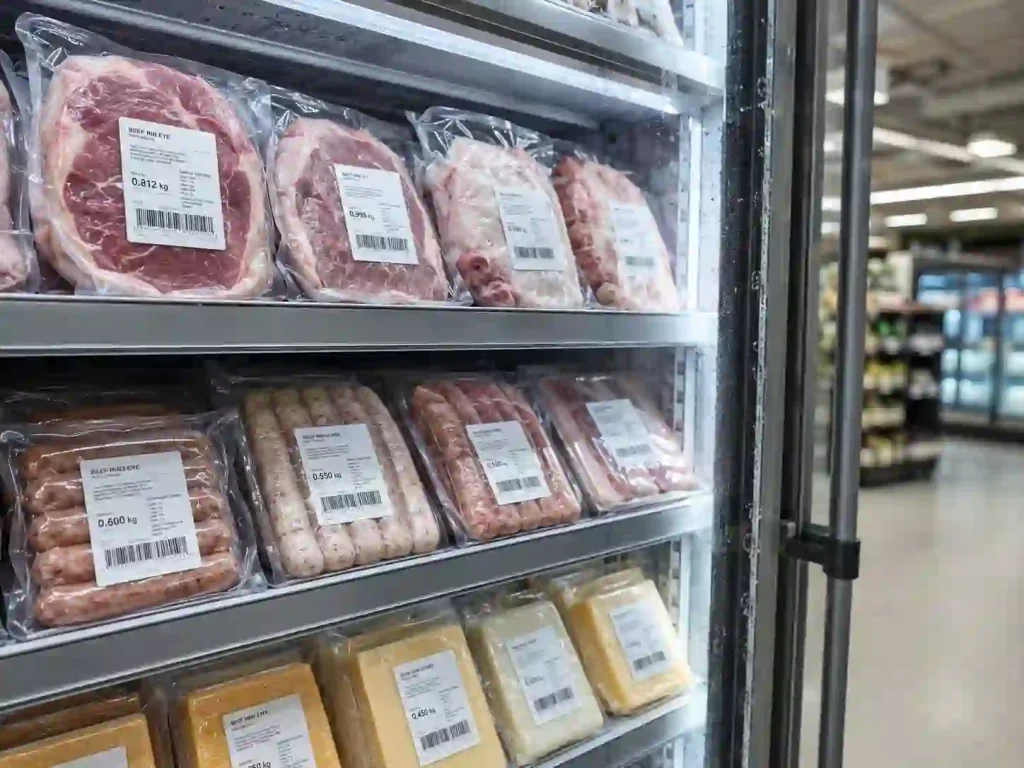
- Chilled Food Packaging – Meat, seafood, deli and prepared meals.
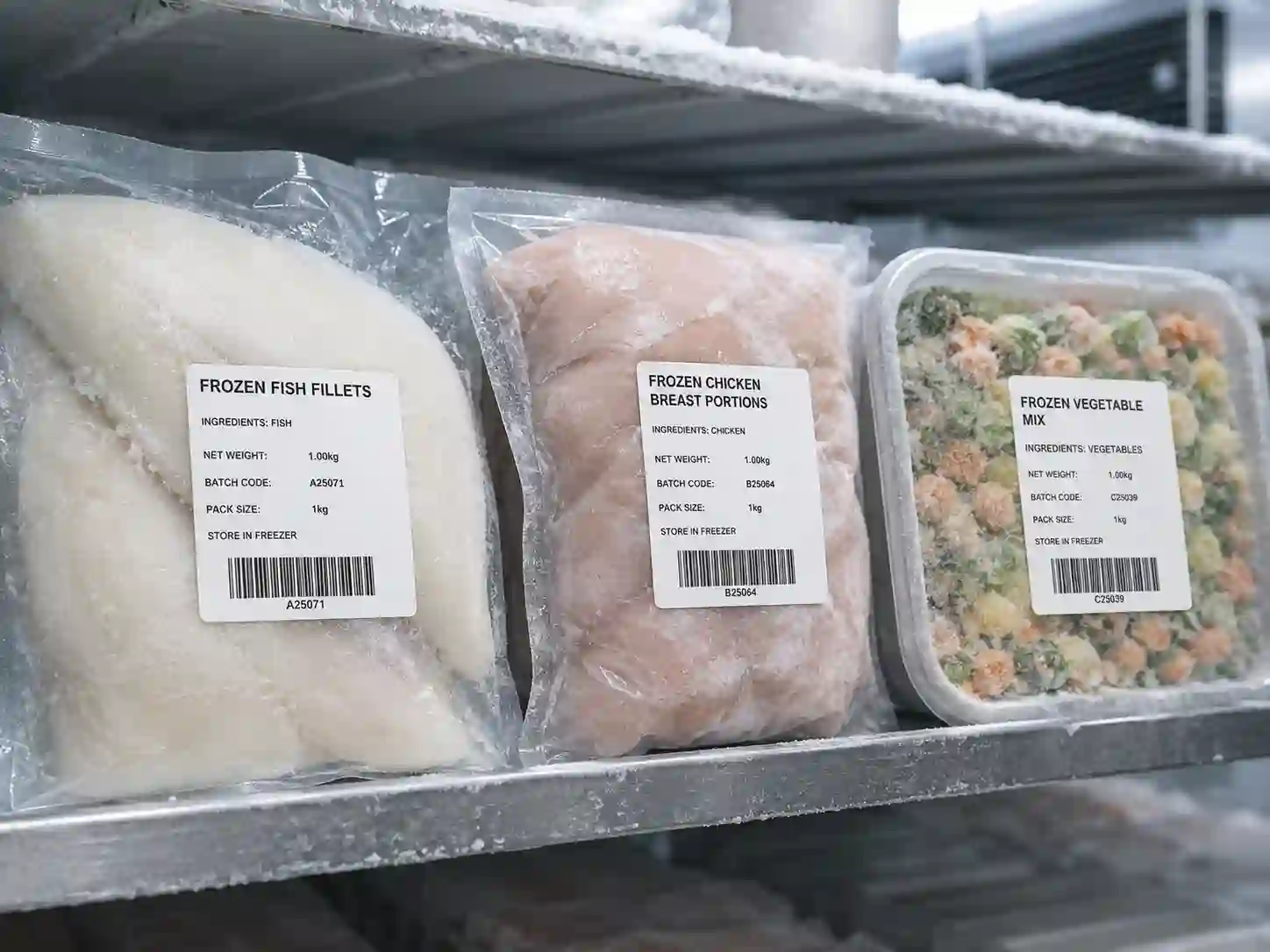
- Frozen Food Packaging – Vacuum packs, trays, pouches and cartons.
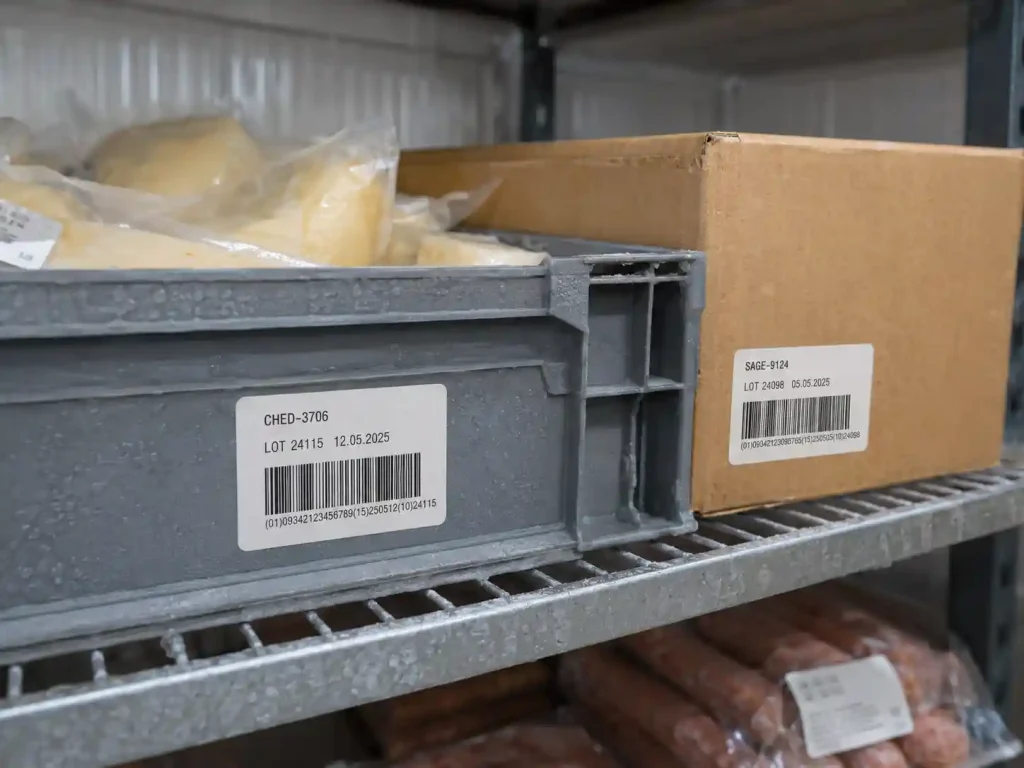
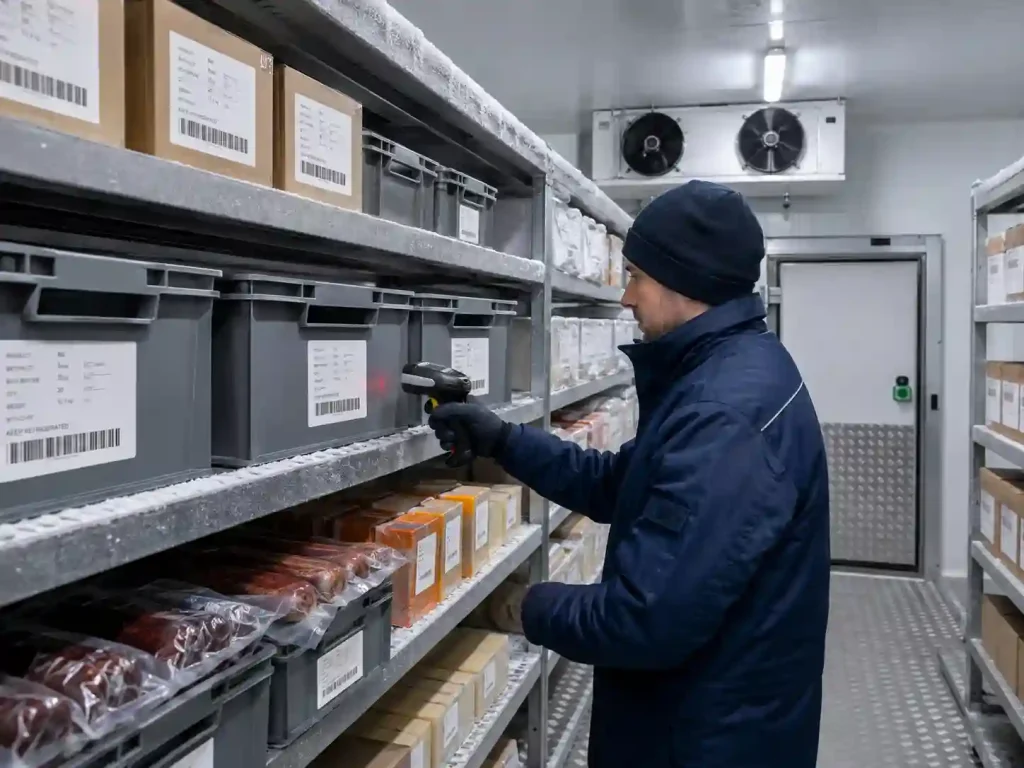
- Cold Storage Identification – Racks, crates, totes, pallets and locations.
- Refrigerated Transport – Insulated containers and shipping cartons.
- Retail Display & Date Coding – Barcodes, batch details and date information.
Label Solutions Across the Cold Chain
Application-led constructions for chilled, frozen, storage and transport environments.
Chilled Food Packaging
For refrigerated products with surface and moisture confirmed.
Deep-Freeze Packaging
Application and service temperatures confirmed separately.
Cold Storage ID
Barcode labels for racks, crates, totes and pallets.
Refrigerated Transport
Variable data for cartons and insulated containers.
Technical Specifications
Final performance is verified on the actual package and under expected cold-chain conditions.
- Face Materials: Top-coated direct thermal paper, thermal transfer paper or moisture-resistant film
- Adhesive Options: Permanent, removable or freezer-grade options; application-matched
- Release Liner: White glassine or application-specific liner
- Typical Surfaces: PET / PP / PE packs, flexible film, coated cartons and reusable plastic crates
- Temperature Conditions: Application temperature and storage/service temperature confirmed separately
- Print & Roll Format: DT or TT; blank or preprinted; custom size, core, diameter and winding
Frequently Asked Questions
What is the difference between chilled and freezer labels?
Chilled labels handle surface condensation and light moisture in refrigerated display (+2°C to +8°C), whereas freezer labels incorporate rubberized sub-zero adhesives engineered to bond permanently down to -40°C.
Can labels be applied to a wet or frosted package?
Yes. Our deep-freeze adhesives are formulated to penetrate thin moisture film and frost layers on plastic trays and flexible film. For extreme moisture, applying labels prior to freezing yields the strongest bond.
How should the required temperature range be specified?
Specify both application temperature (the surface temp when labeled) and service temperature (the lowest/highest environmental exposure during storage and transit).
Should I choose paper or synthetic film?
TOP-coated direct thermal paper works well for dry cold storage and short-term retail, while synthetic PP/PE film is mandatory for direct water immersion, heavy frost, or long-term deep freezing.
Are these labels suitable for direct food contact?
We supply ISEGA-certified adhesives and FDA 175.105 compliant paper/film stocks suitable for indirect contact on food trays, vacuum-sealed bags, and deli packaging.
What is the minimum order quantity?
Standard roll sizes start at a low MOQ of 10,000 labels, while custom die-cut dimensions and synthetic film constructions can be tailored to your production volume.
Cold-Chain Labels — Practical Buying Guide
Four checks to complete before choosing a chilled or freezer label construction.
1. Confirm Two Temperatures
Record both application temperature and the lowest storage or service temperature.
2. Match Surface & Moisture
Confirm the package substrate, condensation, surface texture and application process.
3. Choose Paper or Film
Consider moisture, abrasion, flexibility, exposure time and print durability.
4. Verify Print & Scanning
Test barcode readability after condensation, cold storage and expected freeze–thaw cycles.
Related articles and guides
Read more on our official blog
APPLICATION GUIDE
The Ultimate Guide to Freezer-Safe Labels for Organic Food Packaging
Discover deep-freeze adhesives and protective coatings designed to resist moisture, frost, and sub-zero temperatures.
How to Choose the Right Thermal Label Sensor
Learn the differences between Gap, Black Mark, and Continuous sensors to ensure flawless printing and printer compatibility.
Need Custom Cold Chain & Freezer Labels?
Tailored material structures, specialized low-temperature adhesives, and certified food-contact compliance for your cold supply chain.